Worn and broken teeth
An unfavourable bite with worn, broken and decayed teeth, rebuilt top and bottom for both bite and looks.
HomeTreatmentsVeneers
Dr Habib's signature style is ultra-natural: real tooth shapes, surface texture and a soft see-through edge. Patients travel from all over Australia for it.
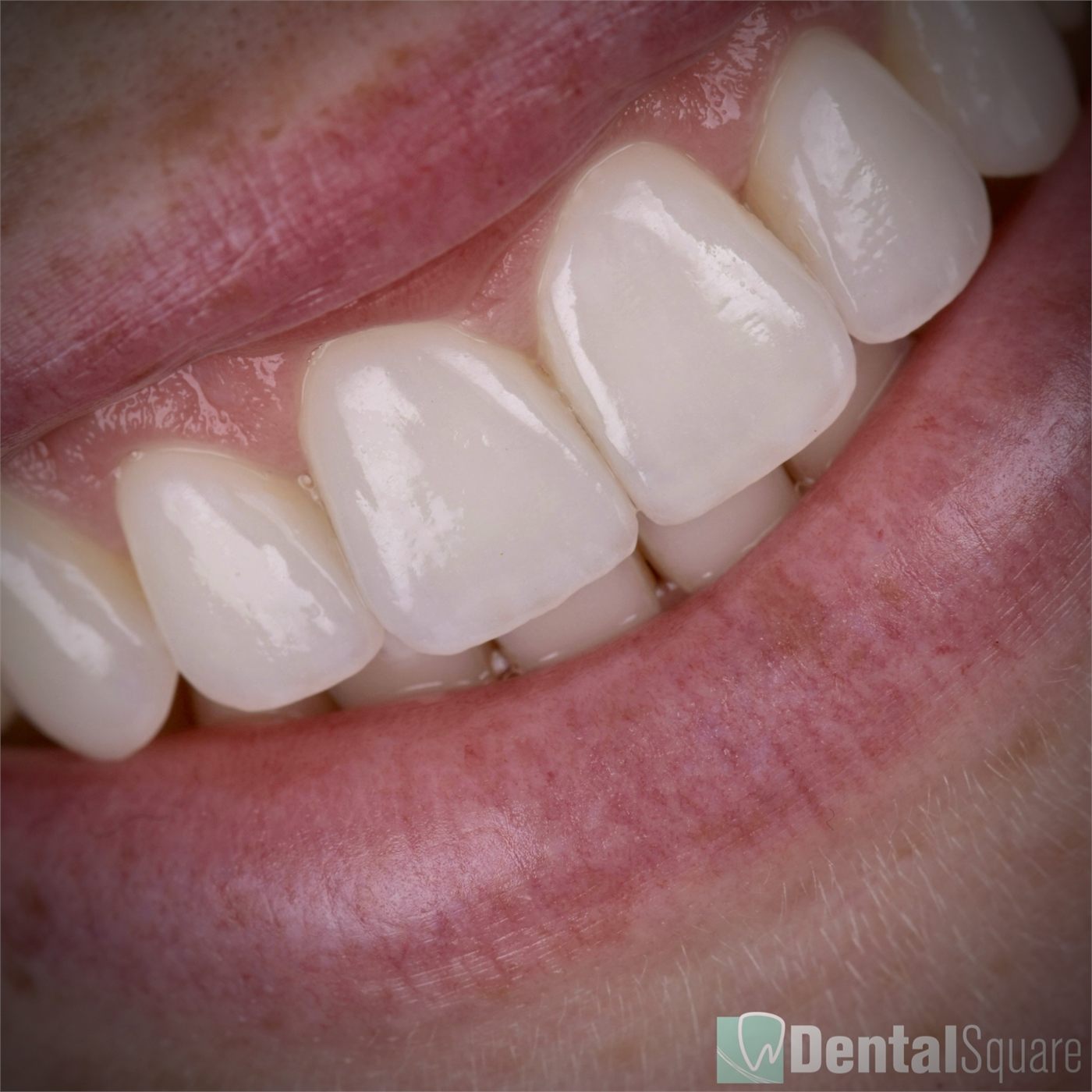
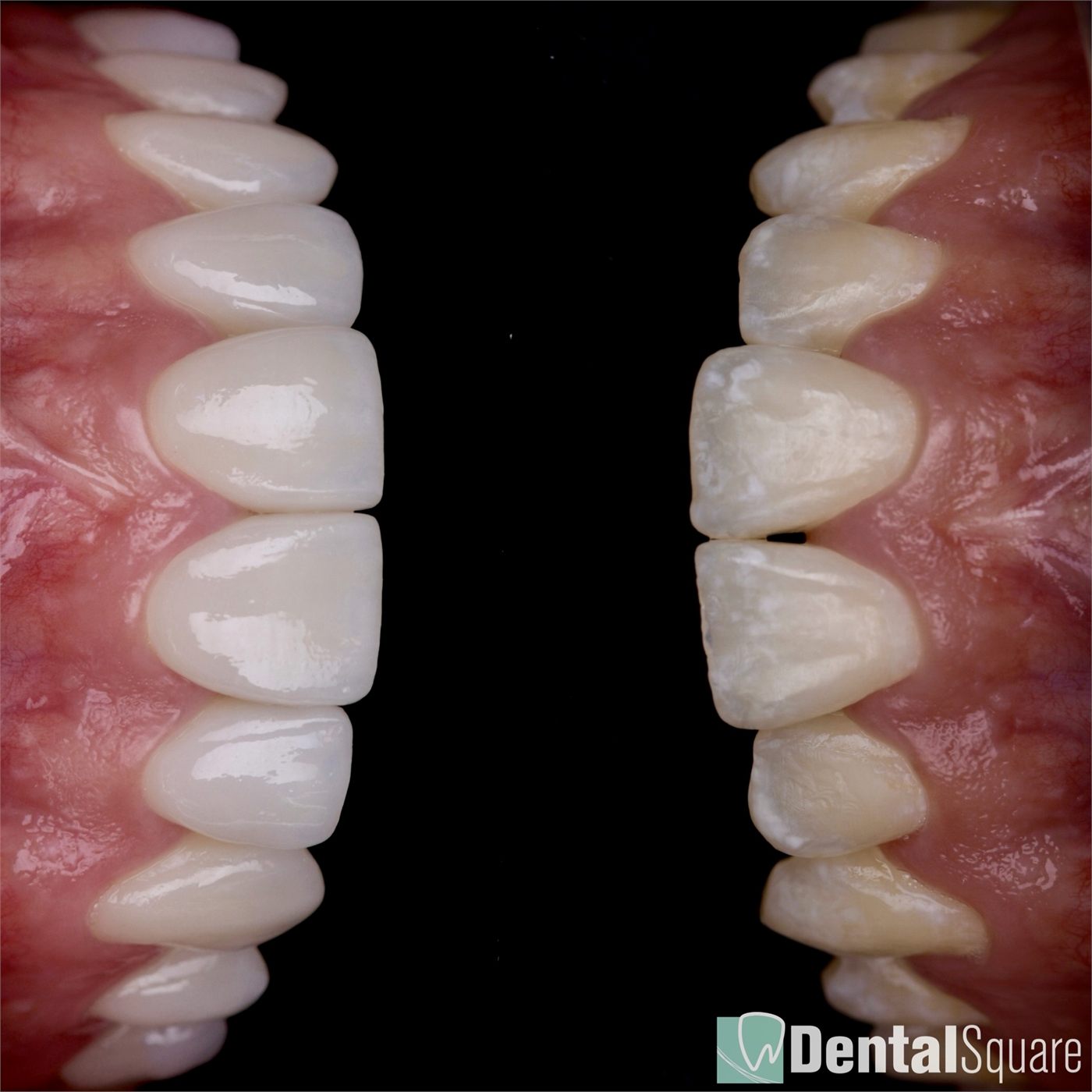
Porcelain veneers are custom-made, wafer-thin tooth-coloured shells bonded to the front of the teeth. Once bonded they are strong and durable, and they mimic natural teeth closely.
Composite veneers, also called composite bonding, are tooth-coloured resin applied directly to the teeth and sculpted by hand. They are a great alternative to porcelain at a fraction of the cost, and many cases are finished in a single visit.
They are also one of the most technically demanding things a dentist can do well. Dr Habib uses custom tinting to recreate the see-through edge of a natural tooth.
Bonding or veneer? When resin covers only part of a tooth, such as a chipped corner, it's called bonding. When it covers the whole front surface, it's a composite veneer.
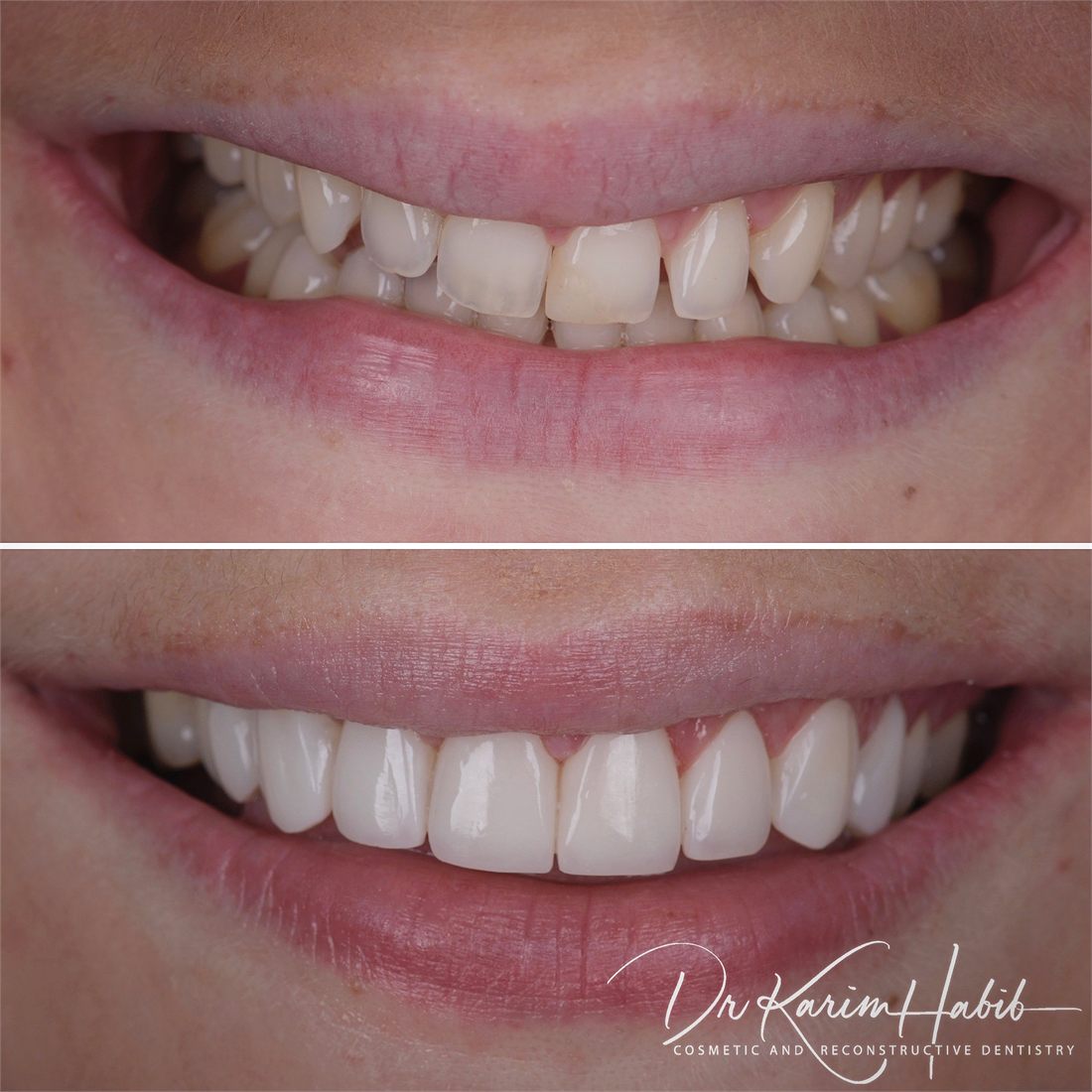
A smile makeover redesigns the whole smile, combining whatever it needs: veneers, crowns, teeth alignment, whitening, implants or bridges, and laser gum recontouring.
An unfavourable bite with worn, broken and decayed teeth, rebuilt top and bottom for both bite and looks.
Chipped, worn teeth and tired old crowns replaced with porcelain veneers.
Old restorations, chips and stains corrected in one planned makeover.
Shape and colour corrected, with missing teeth replaced as part of the plan.
When a lot of gum shows and teeth look short, the gums can be reshaped with a laser. The gum lift (gingivectomy) is simple and quick, needs no stitches, and makes the teeth look their natural length.
Other options include orthodontics, muscle-relaxing injections that let the lip sit lower, or jaw surgery in severe cases.
Laser, no stitches
Among the strongest and best-looking restorations. Used for teeth with very large fillings, heavy staining or decay, poor shape, and after root canal treatment when the tooth is more likely to crack.
Where there's a tooth either side of a gap, crowns on those teeth hold one or more replacement teeth between them. A bridge restores chewing and speech, keeps neighbouring teeth from drifting and keeps the face supported. Implants and dentures are the other options.